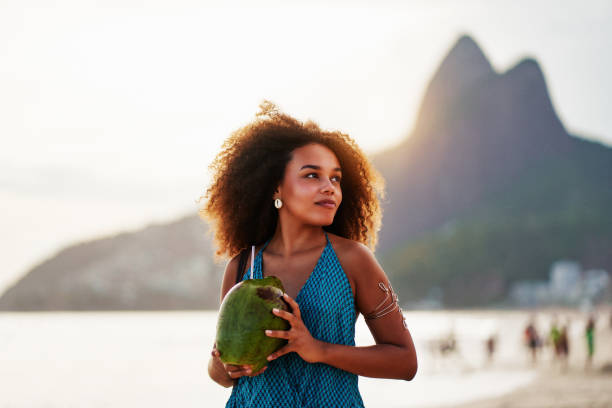

From waiting on deposits to protecting their peace, more Black travelers are embracing trips designed around their own schedules, interests and intentions.
For years, the group chat has been where dream vacations begin—and often where they quietly disappear.
Someone suggests Jamaica. Another person creates a payment schedule. Screenshots of villas and flight deals begin flying. Twelve people say they are interested, six promise to submit their deposits and, by booking day, only two are still responding.
That familiar cycle is helping fuel a larger shift: travelers are becoming increasingly comfortable exploring the world without waiting for friends, relatives or partners to join them. Booking.com reported that 58% of surveyed travelers planned to travel alone in 2024, demonstrating how quickly solo travel has moved from a niche choice to a mainstream way of seeing the world.
For Black travelers, however, leaving the group chat behind can represent more than scheduling convenience. It can be an act of independence, self-discovery and intentional living.
The Freedom to Stop Waiting
Group trips can be memorable, but they also require compromise. Travelers must coordinate budgets, work schedules, destination preferences, dining choices and personalities before anyone reaches the airport.
Solo travelers answer to themselves.
They can choose the destination that genuinely interests them, spend more on the experiences they value and leave space in the itinerary for spontaneity. A wellness retreat does not have to become a party weekend because someone else wants nightlife. A cultural trip does not have to be reduced to photo opportunities. A quiet morning can remain quiet.
That freedom aligns with the broader direction of travel in 2026. Booking.com’s current travel predictions describe an “Era of YOU,” in which travelers are rejecting one-size-fits-all vacations and building journeys around their individual passions, identities and interests.
American Express Travel has identified a similar desire for highly personal, story-worthy experiences. Its 2026 research found that 74% of surveyed Millennials and Gen Z travelers view travel as a non-negotiable expense, while 83% prioritize distinctive, authentic experiences over heavily visited tourist attractions.
Solo travel provides space for exactly that kind of experience: one created around the traveler rather than the expectations of a group.
Black Travelers Have Never Been a Small Market
The rise of Black solo travel should not be mistaken for a passing social media moment.
MMGY Travel Intelligence’s landmark The Black Traveler: Insights, Opportunities & Priorities study drew from approximately 8,500 Black respondents across its research phases, making it one of the most extensive studies of the Black travel community.
Its findings established the economic strength of the market. Black U.S. leisure travelers spent an estimated $109.4 billion in 2019, representing 13.1% of the country’s leisure travel spending.
Those figures challenge outdated assumptions that Black travelers are a narrow or uniform audience. Black travelers take luxury vacations, heritage journeys, wellness escapes, road trips, cruises, adventure experiences and international getaways. Some prefer organized groups. Others are discovering that traveling alone allows them to experience a destination with greater freedom and depth.
The available industry research does not yet provide a definitive 2026 percentage for Black Americans traveling alone this summer. Still, the combination of strong Black travel spending, widespread interest in solo travel and growing demand for individualized experiences points toward a meaningful change in how vacations are being planned.
Solo Does Not Mean Lonely
One of the biggest misconceptions about solo travel is that the traveler will spend the entire trip isolated.
In reality, traveling alone can make connection easier. Solo travelers often have more opportunities to speak with local residents, join walking tours, take cooking classes, attend cultural events or meet other travelers during shared experiences.
The difference is choice.
A solo traveler can enjoy company without having every hour dictated by the group. They can spend the morning exploring a historic neighborhood, join an afternoon excursion and return to their hotel for a quiet dinner without having to explain themselves.
Travel can become restorative rather than performative.
That matters in a culture where people are frequently expected to remain available—to family, employers, partners, clients and social circles. A solo trip offers a rare opportunity to ask a simple question: What do I want this experience to feel like?
The answer may be adventure. It may be rest. It may be reconnection with heritage, creativity, spirituality or personal ambition.
Whatever the answer is, it does not require approval from the group chat.
Safety and Representation Still Matter
The freedom of solo travel does not erase the realities Black travelers may consider before choosing a destination.
MMGY’s Black traveler research found that safety and representation can strongly influence travel decisions. In one study, 54% of Black U.S. travelers said they were more likely to visit a destination when they saw Black people represented in its travel advertising.
Representation can offer a clue about whether a destination understands and welcomes Black visitors—but marketing should not be the only consideration. Solo travelers should research neighborhoods, transportation options, local customs, lodging reviews, emergency resources and the experiences of other Black travelers before booking.
They should also share itineraries with trusted contacts, keep copies of important documents, arrange reliable airport transportation and avoid posting their exact real-time location publicly.
Careful preparation is not fear. It is part of traveling confidently.
A knowledgeable travel advisor can also help evaluate accommodations, simplify logistics and design an itinerary that balances freedom with support—especially for a first solo international trip.
Summer Travel Is Becoming More Intentional
Travel demand remains strong despite concerns about prices and economic uncertainty. The U.S. Travel Association forecasts that travel spending in the United States will reach a record $1.37 trillion in 2026.
At the same time, travelers are becoming more deliberate about where their money goes and what they receive in return. Expedia’s 2026 summer research indicates that travelers are taking a more measured approach, comparing destinations and adjusting their plans as prices and demand shift.
For a solo traveler, that may mean choosing a shorter but more meaningful getaway. It could mean extending a work trip, selecting a destination with dependable public transportation or spending more on a centrally located hotel to reduce logistical stress.
The goal is not necessarily to travel farther or create the most impressive social media post. The goal is to take a trip that genuinely reflects the traveler’s current season of life.
The Group Chat Can Catch Up Later
There is nothing wrong with traveling with friends. Group trips can create lifelong memories, strengthen relationships and make certain experiences more affordable.
But travelers no longer have to place their dreams on hold because other people are undecided.
The passport does not need a committee meeting. The beach does not require unanimous approval. That cultural tour, restorative retreat or birthday getaway does not become less meaningful because only one name appears on the reservation.
For many Black travelers, the next chapter of travel is not about abandoning community. It is about refusing to abandon themselves while waiting for everyone else.
Sometimes the best trip begins when you stop asking, “Who is coming with me?” and start asking, “Where am I ready to go?”
Sources
Research and reporting referenced in this article include MMGY Travel Intelligence and the Black Travel Alliance’s The Black Traveler: Insights, Opportunities & Priorities, Booking.com travel research, American Express Travel’s 2026 Global Travel Trends Report, Expedia Group’s 2026 summer travel findings and the U.S. Travel Association’s industry forecast.